
XFX 280GTX XXX Edition

Introduction

Search Reviews

IntroductionXFX Logo
 
With the advent of the mighty 4870x2, XFX have tweaked the GPU and memory clockspeed of NVidias flagship 280GTX to bring you its top of the pile XFX 280GTX 'XXX' edition. We reviewed the stock clocked MSI GTX280 back in June of this year so rather than re-hash reviews of the same old cards and benchmarks showing a predictable increase in scores, we will explore the 280GTX's capabilities with a series of benchmarks aimed more specifically at PhysX and endeavour to explore what PhysX is and how it works. 
 
Before we delve into the world of PhysX lets take a look at the card we will be using for todays review.
 
 
Specification
 
As previous stated, this 280GTX is no ordinary GTX, it is the premier overclocked 'XXX' edition. As it is overclocked you can guarantee that these overclocks have been stringently tested in house with the cherry picked cores and memory to bring you blistering speed along with rock solid reliability.
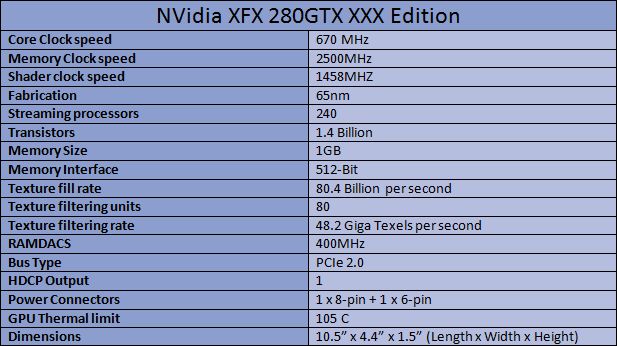
 
 Specification
 
As you can see, the GPU clockspeed has been increased just over 10% from a stock 602mhz to a toasty 670mhz and the memory has been hoisted up to to a head spinning 1250(2500) MHz from a stock 1107(2214)Mhz, meaning that the Shader clock speed has also increased to  1458mhz - an 11.2% increase from stock 1296mhz! Mouthwatering overclocking from XFX! However, we at OC3D will never be content with a manufactured overclock and we will see, later in the review, how much more performance we can squeeze from the card. For now though, lets take a look at the packaging and presentation.
«Prev 1 2 3 4 5 6 7 8 Next»

Most Recent Comments

17-09-2008, 10:49:14

w3bbo

I think its a good card but doesn't add anything new because even a vanilla card can be OCed. It is a great review for exploring Physx, something of which I hope we see more of in the future.
With forceware 180, will we be able to use any 8,9 or 200 series for physics processing? If does it have to be SLIed because an albatron 8600GT PCI card looks good for that?


The 'Big Bang 2' drivers are said to include the following :

* Multimonitor support for SLI
* Display Port support
* OpenGL 3.0
* Hardware video transcoding
* GPU PhysX support
* Performance optimizations

Whether the physX support is aimed at using, say, a low end card for PhysX only and a high end card for other GPU calculations I couldn't say but it would certainly be a neat way of utilising your old NV GPU's.

For those who want to give PhysX a try out, here is the latest driver:

http://www.nvidia.com/object/physx_8.09.04_whql.html

17-09-2008, 10:54:07

Diablo
I'm in the rather annoying position of having a really nice sound card and not wanting to get rid of that in order to stick a third x16 card in. Hence the pure power of a PCI bus card (try saying that while eating)

17-09-2008, 10:56:49

w3bbo
I'm fairly confident SLI 280GTX's will be able to handle PhysX m8.;)

17-09-2008, 10:59:05

k4p84

But somewhere along the line NVidia should have been commended for incorporating PhysX into their cards no?[/SIZE]


Is the addition of Physx not just a driver/software update? They did not own Ageia when the 8 series was been made yet it is now Physx capable.

ED

17-09-2008, 11:00:28

Diablo
My mentality: Can something else be put on? If not, why not, if so...new parts here we come. This is mainly why the case is a rats nest of wire, has a 220mm fan on the outside and has one drive bay left...

17-09-2008, 13:14:57

Rastalovich

Is the addition of Physx not just a driver/software update? They did not own Ageia when the 8 series was been made yet it is now Physx capable.

ED


Afaic, the initial release of the nVidia variant of the Aegia drivers was merely a recompile of the existing source.

They happened to use the gpu, they could equally have used the cpu, and what it looks like they`re point towards was a selector for the user to use whatever they chose.

The code must be either that good, or that well structured, that they were capable of adapting it in whichever fashion they wanted. This could be cos it was perhaps dev`d as a cross platform or simply x86 for giggles and final compile for the pci physx cards.

Either way, it was obviously easy for nVidia to cope with and manipulate to an extent. I feel they automatically discounted the cpu calculator in preference to gpu/physx-pci-card as the gains are that much greater.

Get some gaming companies rolled in tbh !!

17-09-2008, 15:20:00

Diablo
I reckon that as Physx was coded in C, the PCI card could handle that, and as the 8 series onwards have got CUDA (C with a bit of adaptation) it wouldn't be too difficult to use the graphics chips in the way described above

19-09-2008, 19:20:19

Diablo
Sorry for the double post, but:
What were the temperatures for the 280GTX XXX? I have an Asus card (air cooled) that is OCed to about 645MHz and one (the primary) sits at 72 on load, the second sits at 80 (after a quick 2 hour stint on crysis at max settings and 8xQ aa)

22-09-2008, 21:19:03

PP Mguire
The 4870x2 had such a hit in FPS with enabled PhysX becasue the calculations had to be done on the cpu which means obviously youll take a hit in FPS where with the Nvidia card the calculations are done on the GPU meaning greater FPS.

People need to realize what exactly PhysX is and does before judging it and performance vs eye candy.

PhysX is nothing but added on eye candy which is going to actualy stress whatever its run on more. The GTX had the upper and becasue it can calculate PhysX faster than a CPU in case of the 4870x2. So if you enable that PhysX button expect a drop in FPS, not an increase. Vantage on the other hand gets an increase becasue the calculations are done on the GPU ratehr than the CPU so obviously youll get more FPS. Games though, are the opposite.

Also, saying lack of PhysX games is actualy quite untruthful. There are alot more PhysX enabled games than you might think. Devs just dont make a big stink about it like they did with UT3....which imo was a flop.

24-09-2008, 17:58:24

SuB
afaik physx was implementable because of the unified shader unit things.
Because the 8 series were the first to use these they are the first to be able to use physx, i think its the same in the 280's they have SO MANY unified shaders they have more spare for doing physics calculations. thats my view on it anyway? i don't think there is any EXTRA hardware per-se its just the way the code was adapted, and the shaders adapted to be able to calculate complex physics?
I got a physx card when i got my 8800gts before the ownership change and can compare the performance between the 2 and honestly (oddly) the 8800 kicks its ass :| which is shocking.
but then those 'unlock a 100% performance gain' drivers never appeared for the physx cards that they were on about on release.
x

Register for the OC3D Newsletter

Subscribing to the OC3D newsletter will keep you up-to-date on the latest technology news, reviews and goings-on at Overclock3D. We won't share your email address with ANYONE and you can unsubscribe at any time by sending a blank email to newsletter-unsubscribe@overclock3d.net.

Simply enter your email address in the box below and be sure to follow the confirmation emails that will arrive in your e-mail shortly after to complete the registration.

If you run into any problems, just drop us a message on the forums or at one of the addresses on our Contact Us page.